Slouch Patrol Posture and Ergonomics Trivia













Quiz Complete!
Slouch Patrol: Practical Posture and Ergonomics for Real Life

Most everyday aches are less about one dramatic injury and more about tiny habits repeated for hours. The body is resilient, but it is not a fan of being held in the same position, slightly off balance, day after day. The goal of good posture and ergonomics is not to sit like a statue or force a military straight back. It is to keep your joints in neutral, spread effort across bigger muscles, and reduce the small stresses that add up in your neck, shoulders, wrists, and lower back.
A helpful idea is the neutral spine. Your spine naturally has gentle curves, and neutral means you keep those curves rather than flattening or exaggerating them. When you sit, think of your ribcage stacked over your pelvis instead of drifting forward. A chair setup that supports this usually includes feet flat on the floor, knees roughly level with hips, and a backrest that meets your lower back. If your feet do not reach comfortably, a footrest or even a sturdy box can prevent you from sliding forward and slumping. Armrests are useful when they let your shoulders relax, but if they are too high they can cause shrugging and neck tension.
Screen height is another quiet troublemaker. If you look down at a laptop all day, your neck is doing extra work the whole time. A simple fix is to raise the screen so the top is around eye level, then use an external keyboard and mouse so your arms can stay comfortable. The best position for the keyboard is usually close enough that your elbows stay near your sides and your wrists remain straight rather than bent up, down, or sideways. Many people unknowingly “hover” their hands and tense their shoulders while typing. Let the desk or armrests carry some of that load.
Your phone may be the sneakiest posture trap because it travels everywhere. The classic texting posture is head forward, shoulders rounded, and the phone low near your lap. Bringing the phone closer to eye level reduces neck strain, but try to balance that with relaxed shoulders. Switching hands, using voice input, and taking short breaks can help. Even a few seconds of looking up and rolling the shoulders back can reset your posture.
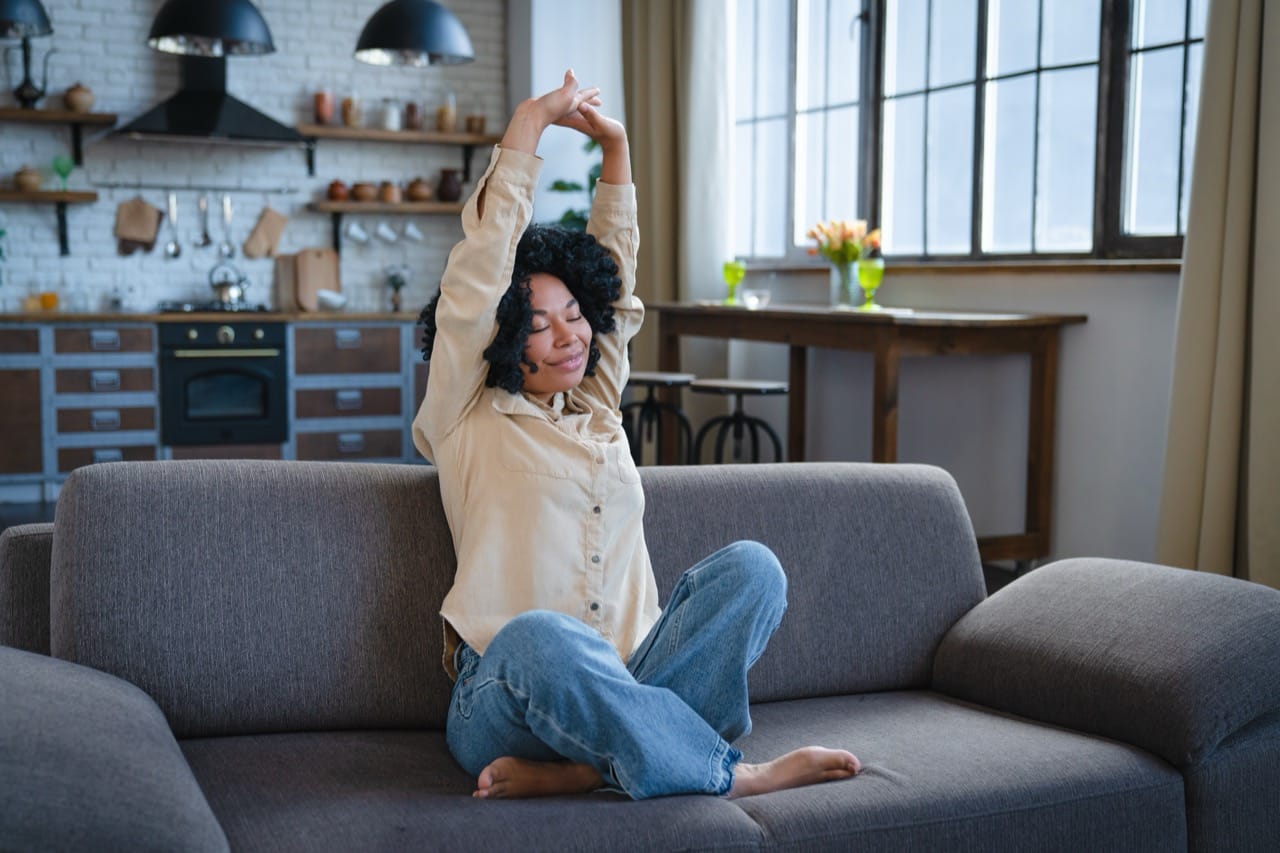
Driving and couch lounging count too. In the car, sit close enough that you can reach the wheel with a slight bend in your elbows, and adjust the seat so your back is supported and your headrest is positioned to catch your head if needed. On the couch, deep slumping can feel relaxing but often irritates the lower back and neck over time. Adding a small pillow behind the low back or sitting with your hips closer to the backrest can make lounging less punishing.
Lifting mechanics matter outside the gym. The safest lifts usually keep the load close to your body, your spine braced in a neutral position, and your legs doing most of the work. Twisting while carrying something heavy is a common recipe for back pain, so pivot with your feet instead. When you carry a bag, a one strap backpack or heavy tote on one shoulder can pull you into a tilt. Alternating sides, using both straps, and lightening the load are simple fixes.
The most underrated ergonomic tool is movement. Even a perfect setup becomes a problem if you never change position. Short, frequent posture resets beat long, infrequent stretches. If you can remember just one rule, make it this: the next position is often the best position. Keep shifting, keep adjusting, and your body will thank you.