
Strides and Switchbacks Science Quiz











Quiz Complete!
The Hidden Science in Every Stride and Switchback

A walk on flat ground can feel simple, but your body is running a complex physics and biology program with every step. When your foot lands, the ground pushes back with an equal and opposite force, and your muscles and tendons manage that impact like springs and brakes. Much of efficient walking comes from storing and releasing energy in elastic tissues, especially around the ankle. As speed increases, people naturally shift toward a gait that better matches the mechanics of bouncing and energy return, which is one reason running emerges without anyone needing to be taught.
Climbing changes the equation. Gravity demands extra work because your center of mass rises with each step, and that work must be paid for with chemical energy. Your muscles rely on a mix of fuel systems: aerobic metabolism for steady efforts and more anaerobic contribution when you surge or tackle a steep pitch. That is why a climb can feel suddenly harder even if your pace barely changes. The steepness also shifts which muscles do most of the job. Uphill walking recruits the calves and glutes more, while downhill emphasizes eccentric contractions, where muscles lengthen while producing force. Eccentric work is efficient in terms of oxygen use, but it can create more muscle soreness because it stresses fibers differently, especially in the quadriceps.
Switchbacks are not just scenic; they are biomechanics and safety tools. By reducing the grade, they lower peak forces on joints and make traction more reliable. On descents, short steps and a slightly higher cadence often reduce braking forces compared with long strides, which can slam the heel and overload knees. Trekking poles can help here by redistributing some load to the upper body and improving balance. Poles do not magically remove stress, but they can reduce the peak demand on lower-limb joints and make slips less likely, which matters when fatigue sets in.
Feet are another laboratory. Blisters are mainly a friction and moisture problem: repeated rubbing plus softened skin equals trouble. A good fit matters more than brand, and small adjustments can make a big difference, such as lacing to prevent heel lift, using thin liner socks under thicker ones, or applying a low-friction tape to hot spots early. Footwear design balances cushioning, stability, and energy return. Softer midsoles can feel comfortable but may reduce stability on uneven terrain, while stiffer soles can protect from sharp rocks and reduce foot fatigue, especially with a loaded pack.
Hydration and heat safety are often misunderstood. You do not need to replace every drop of sweat, and overdrinking can be dangerous if it dilutes blood sodium. A practical approach is to drink to thirst while paying attention to conditions, effort, and how much you are sweating. In heat, your body cools itself by moving blood to the skin and evaporating sweat, which competes with the need to supply working muscles. Humidity makes evaporation less effective, so a pace that feels fine in dry air can become risky in muggy weather. Electrolytes can help during long, sweaty outings, but the best strategy is managing intensity, taking shade breaks, and recognizing early signs of heat illness.
Altitude adds another twist. With less oxygen available, your heart rate rises for a given effort, and you may breathe faster even at rest. Acclimatization improves performance over days, but there is no instant fix. That is why pacing and conservative goals matter when you hike high.
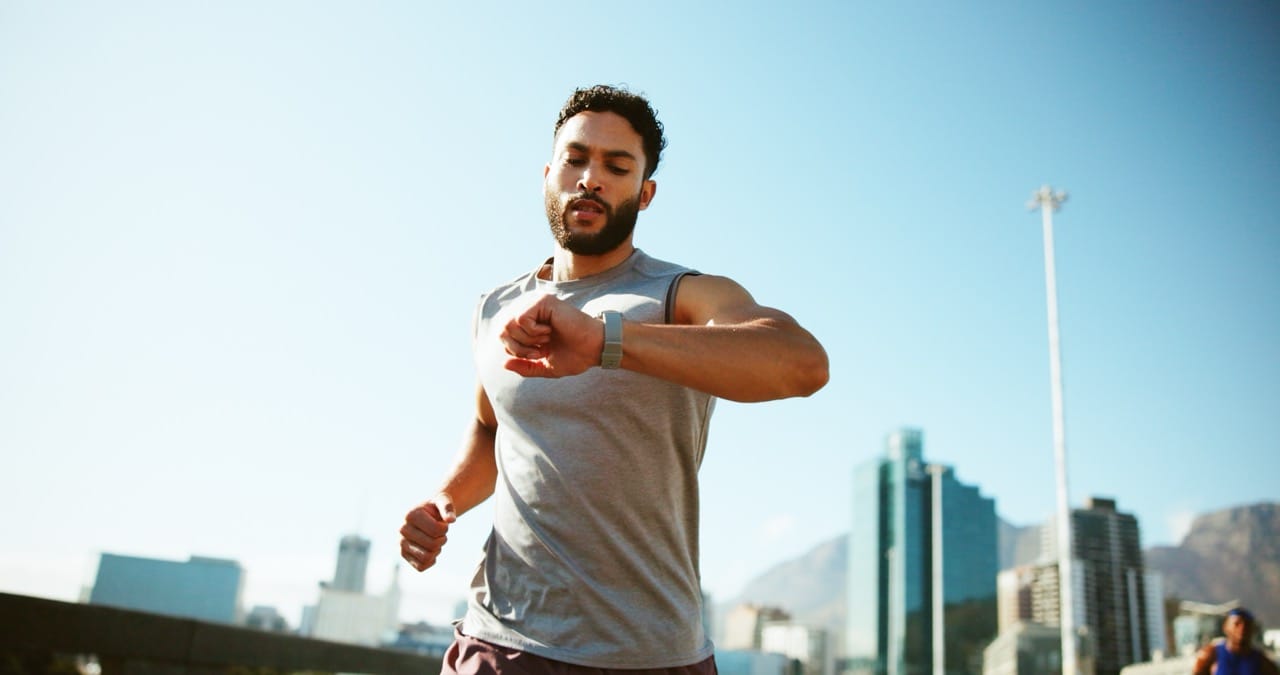
All this science now rides on your wrist. GPS watches estimate speed and distance from satellite positions, which can wobble under trees, in canyons, or during tight switchbacks. Barometers can improve elevation tracking, but weather changes can confuse them. Step counts come from accelerometers that detect rhythmic motion, so pushing a stroller or using poles can reduce accuracy. Optical heart-rate sensors shine light into the skin to estimate blood flow, but they can be thrown off by cold, movement, tattoos, or a loose fit. Knowing what your devices measure, and what they guess, turns data into a useful guide rather than a false judge. The trail rewards curiosity: every stride is a tiny experiment, and you get better results when you understand the variables.